Tuesday, April 27, 2010

Free: HistoryThroughArt


Gerome, Jean-Leon. (1868). Bonaparte before the Sphynx. Retrieved from Free HistoryThroughArt at http://historyatourhouse.com/?page_id=276

So, what do you make of this enigmatic painting? What is Bonaparte doing? What is he thinking? What wisdom is he seeking from the Sphynx as his troops muster in the background? What can we learn about history from this painting? And, how does our knowledge of history influence our interpretation?

Intrigued?

Then visit Scott Powell's HistoryThroughArt webpage, and listen to a couple of free lectures in which he discusses this painting in depth. Currently, he explores five paintings (with two lectures each), and plans to add another painting each month. He begins the series with Norman Rockwell's Young Lady with a Shiner, which does not have any particular historical significance but is a wonderful example of how a painting can tell a story. He uses it to teach students how to look at art, take it apart, and think about it in order to understand the artist's message. Later lectures place the paintings in historical context and require the student to draw from their knowledge of history.

The lectures are recorded live with Mr. Powell's upper elementary History At Our House class, delivered via teleconference. Mr. Powell interacts with the students and encourages their participation, while they view an image of the painting on their home computers. He instructs them on note-taking, asks them questions, and prompts critical analysis. Although these lectures are directed toward students in 4th through 6th grade, students of all ages will learn something.

To learn more about Mr. Powell, History At Our House, and HistoryThroughArt, visit his website at http://historyatourhouse.com. To hear free sample lectures, go to http://historyatourhouse.com/?page_id=171

Back to Blogging! Watch for my new web site: The School and Home Library!

I'm Back!!!

After several weeks in which I did not post anything to this blog, I am back and ready to go! I've been working on my website The School and Home Library: A Virtual Library for Home Schoolers which will be published to the web within days. It has everything thing from reference (including Ask-a-Librarian services), to sources for free down-loadable books, databases, search tools, museums, information literacy and Web 2.0, all in a user-friendly, well-organized format. Be on the look out for it!!!

Friday, March 26, 2010

Virtual Choir

Here is the penultimate example of the power of Internet for collaboration and creation, and for pushing the boundaries on the possible. Eric Whitaker created a choral piece with 185 singers from 12 countries, each singing their part to musical accompaniment while he conducted, and then combining their video and audio. Amazing!


Here is the link to Eric Whitaker's blog where he explains how the recording was made. This is the potential we offer our children when we teach them how to use technology to explore their own interests, to connect with others, and to participate in the creation of new knowledge!

Saturday, March 20, 2010

Coming soon: School and Home Library Web Site

I realize that my posts have been few and far between in recent weeks. Everyone is busy, yet I claim that as my excuse. Between home schooling, taking classes at the University of South Carolina, teaching a home school class on water rights using online technologies, and writing a book with my professor, I find that I have little time for anything else.

I spend most of my free time working on my School and Home Library web site. I am creating the web site to fulfill a graduation requirement for my Master's Degree in Library Science. It is supposed to be a school library web site; however, as I plan to make my career in home schooling, I have obtained permission to create a virtual library site for home schoolers. The site will be a portal to free, online tools and applications including reference, databases, search tools, digital libraries, curriculum materials, information literacy, and Web 2.0. I hope to have it up and running within a month. So, please, bear with me during the interim. I have not forgotten home schoolers, and I am constantly search for ideas and technology to expand our curricula and to benefit our children.

Thursday, March 11, 2010

Bookshare: Free Downloadable Books for Individuals with Print Impairments

Bookshare is a wonderful resource for individuals with "print impairments"-- loss of sight, visual impairment, dyslexia or other learning disabilities, developmental disabilities, or learners of English as a second language.

At Bookshare, you can download free books and periodicals, free software for assistive reading technology (i.e. screen readers), and Braille embossers. Bookshare offers more than 60,000 books, textbooks, teacher-recommended readings, newspapers, and periodicals. Books include best sellers, Newbery Award winners, Pulitzer Prize winners, and winners of the Hugo awards and Edgar Allen Poe awards.They also have over 1,000 Spanish language books.

Free memberships are available with documentation of disability and includes access to 100 books per month, downloads of Humanware's Victor Reader Soft Bookshare edition, Don Johnston's READ: Outloud Bookshare edition, other software and hardware options (like an Mp3 download), and BRF format for Braille embossers. People without reading difficulties may also obtain a membership for $75.

Visit the Don Johnston web site to learn about assistive technology for students with learning disabilities, including writing software for individuals with dysgraphia, and for individuals with Autism. (Please note that these products are not offered on the Bookshare website and are not free).

Friday, February 26, 2010

World Maths Day

World Maths Day is next Wednesday,March 3, and it's not too late for you and your home school children to join the fun! Visit the World Maths Day web site to enter the competition:
  • Students play at home and at school against other students around the world in live games of mental arithmetic. Each game lasts for 60 seconds and students can play up to 500 games, earning points for each correct answer. The students who answer the most questions appear in the Hall of Fame. Students cannot select their level but will move up as they progress (quoted from the web site).
Registration is free and only takes few minutes. The competition last for 48 hours, the amount of time that it is March 3 somewhere in the world. You can even play with your iphone or itouch! All participants will receive a certificate and winners receive prizes. Last year 452,681,681 questions were answered correctly by 1,952,879 students from 204 countries! Hurry, registration ends March 1!

Monday, February 22, 2010

Rich Curriculum Resource from the Annenberg Foundation

Annenberg Media, created by the same people who work in partnership with public television to produce high-quality educational programming, have free online curriculum for high school, college, and adult learning. Teacher education courses are available for curriculum topics in grades k-8. Go to Learner.org to take a look.

Curriculum is available for the Arts, Foreign Languages (Spanish and French), Literature and Language Arts, Science, Mathematics, Social Studies and History.Most courses includes free video streaming which can be used on its own, with purchased printed materials (textbooks, etc), or in conjunction with another curriculum. Courses which do not include video streaming (and those that do) have DVDs or Videos available for purchase. Teacher guides and continuing education courses for educators are also available.

I viewed the introduction to Algebra, the first of 26 half-hour algebra lessons, which explained the importance and relevance of algebra. The video was high quality, kept my interest, and I actually learned something. I also viewed the first Spanish lesson of Destinos, An Introduction to High School and College Level Spanish. The 52 half-hour video lessons use a telenovela to immerse "students in everyday situations with native speakers and introduces the cultures, accents, and dialects of Mexico, Spain, Argentina, and Puerto Rico" (quoted from the web site).
Lessons include speaking, listening and comprehension skills.

The material for grades k-8 are aimed at helping teachers to better understand student learning, facilitate classroom activities, and increase the understanding of curriculum concepts. The videos are not meant to be viewed by the students, but parents may be able to use portions of some to illustrate important concepts or ideas.

Thursday, February 18, 2010

Creating Comics

Those of you who enjoy graphic novels and comics might enjoy making your own comics. Kids especially will enjoy these online applications for comic creation which, believe it or not, have educational value. Creating online comics can increase their information literacy and media literacy, enable them to participate in an online community, foster creativity, and provide a fun way to demonstrate learning. Just think about it. They could use a comic to summarize a book plot, illustrate and explain a scientific concept, summarize an historic event, or create their own story. Creating a comic requires planning, sequential thinking, artistic ability, and a sense of humor.

The following are some of my favorite comic making applications. Most are free; I think one of them has a 14 day free trial and then charges $1 per student for 30 days. ReadWriteThink's Comic Creator is straight-forward and easy to use, and provides backgrounds. Results can be printed. MakeBeliefsComix is free, can be written in Spanish and some other languages, and has information for teachers and home schoolers. Pixton has the 14 day free trial, and of the sites I'm previewing here, has the most creative flexibility. I used Bitstrips to make the comic below after registering for a free account.

Thursday, February 11, 2010

Soomo and Too Late to Apologize


This satirical video Too Late to Apologize:A Declaration was created by the guys at Soomo publishing, the creators of online educational resources for high school and college. Lessons are created by college professors and include primary sources, videos, interviews, and assessments (multiple choice and short answer), all available online! I took a test drive of their Americans Governing course with my 12 year-old daughter who urged me to make an account immediately so she could start using it!

Unfortunately, I was unable to create an account because I am not a professor affiliated with a college. I called Soomo's corporate office and shared my frustration that I was unable to use this fine resource as a home schooler. The representative I spoke to assured me that there was a way for home schoolers to use it-- A home school association in Pennsylvania is using it. She took my name and number, and promised me that me area sales rep would call me. I sure hope so, because I would definitely like to use their materials!

Soomo also has web resources for: International Relations, Comparative Governments,
and is developing classes for writing, political science, Spanish, biology, business, and history.

Take a look at these Soomo and let me know what you think! I would love to be able to tell Soomo that home schoolers are interested. Better yet, if you like what you see, contact them yourselves, and let them know that home schoolers are a potential market for their products.

Tuesday, February 9, 2010

Graphic Novels and Mangas

Last week, I attended a Library Media Connection webinar on the "Best of the Best" Graphic Novels for 2009 with Michele Gorman. Michele is an expert on graphic novels, having published at least 3 books on using graphic novels to promote literacy. As I pointed out in an earlier post, graphic novels are a great way to engage reluctant readers, introduce the classics, and expose children who have difficulty reading to good literature. Graphic books are also tackling nonfiction topics like history, biography, and science. In the books that Michele recommends, the artwork is often exemplary. And besides, graphic novels are just fun to read!

Michele reviewed 10 books each at the elementary, middle, and high school levels. Here, I share some of her recommendations. Please keep in mind that I have not yet read any of these books, but they are all on my reading list. (I usually only endorse books I have already read, but given Michele's expertise, I feel fairly comfortable sharing her recommendations.)

"Best of the Best" for Elementary School:
  • Babymouse #11: Dragonslayer by Jennifer L. Holm and Matt Holm. Random House Books for Young Readers. Michele's comments: Incorporates Math into the plot. Focus on empowering young girls.
  • Binky the Space Cat by Ashley Spires. Kids Can Press. Michele's comments: Very funny, solid story.
  • Fairy Idol Kanon, Volume 1 by Mera Hakamada. Udon Manga. Michele's comments: Manga for kids, especially kids with older siblings who enjoy manga. Theme of empowering girls.
  • Little Mouse Gets Ready by Jeff Smith. Toon Books. Michele's comments: Little mouse gets dressed. Great for toddlers, preschoolers, and beginning readers.
  • Sticky Burr; The Prickly Peril by John Lechner. Candlewick Press. You know those sticky burrs that lurk in the grass and get stuck on your clothes? Michele's comments: Smart.


"Best of the Best" for middle school:
  • The Chronicles of Arthur: Sword of Fire and Ice by John Matthews and Mike Collins. Aladdin. Based on the King Arthur legends. Michele's comment: Great art and great story.
  • A Family Secret by Eric Heuvel, translated by Lorraine T. Miller. Farrar, Straus and Giroux. Award winning. Developed in cooperation with the Anne Frank House/Resistance Museum. Jeroen's grandmother believes her father, a Nazi sympathizer, delivered her best friend to the Nazis.
  • Gettysburg: The Grahic Novel by C.M. Butzer. Harper Collins. Nonfiction. Michele's comments: Illustrated in shades of blue and gray. Depicts the impact of the battle on the town. Gettysburg addressed told through imagery.


"Best of the Best" for high school:

Friday, February 5, 2010

The Olympics and Science

The 2010 Winter Olympics will be coming to us live from Vancouver next Friday night (February 12), and what a great opportunity for all of us to learn, regardless of our interest in sports.

Visit NBC Learn for videos and lessons related to the games. From the NBC Learn web site:

"NBC Learn interviews athletes, coaches, and scientists in this original 16-part series, and unravels the physics, biology, chemistry, and materials engineering behind the Olympic Winter Games. The Science of the Olympic Winter Games is made possible through a partnership with the National Science Foundation." (NBC Universal. 2010. NBC Learn. Retrieved February 5, 2010, from http://www.nbclearn.com/olympics)

Wednesday, February 3, 2010

The National Science Digital Library

Ever get stuck trying to explain a science concept to your 12 year-old? I do, all the time, but now I've discovered The National Science Digital Library. Funded by the National Science Foundation, the National Science Digital Library (NSDL) provides organized access to high-quality Web sites and digital resources in the fields of Science, Technology, Engineering and Math (STEM). Advanced searches can be fine-tuned by grade level, subject, and format (e.g. audio, video, interactive, text). Resources are available for students preK through college. Professional and research collections are also available.

Why is NSDL better than google? Well, when NSDL identifies an online resource, you don't have to worry about whether the science is accurate. Also, none of the web sites are .coms, which means that you won't have to pay to use a resource. NSDL enables you to do a more targeted search, so you won't have to wade through pages and pages of irrelevant hits. And you don't have to worry about accidentally stumbling on inappropriate content.

Friday, January 29, 2010

The Roman Mysteries


My son's obsession with Greek mythology led us to the serendipitous discovery of The Roman Mysteries by Caroline Lawrence, a series of 17 stories set in Rome, 79 AD. (An additional 7 books support the series.) Flavia Gemina, 10 year-old daughter of a Roman sea captain, solves spine-tingling mysteries with her three friends; Jonathon, son of Mordecai, one of the first Messianic Jews; Nubia, a former slave; and Lupus, an orphan they have befriended. Incorporating both Greek and Roman mythology, The Roman Mysteries are meticulously researched and incorporate historic events, people, and architecture. Each book includes a glossary of Latin words, names, and places, and brief description of the historic event central to each story.

My son loves these books and has waited impatiently for each to arrive through inter-library loan. My 12 year-old daughter reads them just as eagerly. A BBC television series is based on these books,and the DVDs for the first two seasons are available throughAmazon.com. Also visit The Roman Mysteries web site for more information about the books, their author, school-related activities, audio samples, the author's blog, and instructions for making a Roman costume.

Recommended for ages 7-14. If you are studying Ancient History, be sure to include these books in your child's accompanying reading.

Wednesday, January 27, 2010

Shmoop

Here's another great online resource for home schoolers: Shmoop! It provides lessons, background, summaries, and analysis for literature, poetry, history, civics, biography, music, and bestsellers. All of the information is written by the faculty, PhD students, and Masters students at Harvard, Berkeley, Stanford and other universities in an easy to read, conversational tone. In their poetry section, they have a guide to reading poetry, a glossary of poetry terms, and study guides for 77 major poems! Full texts of the poems are also provided. I wish I had known of this resource when we were studying The Rime of the Ancient Mariner last week, and we will definitely use it next week when we study Wordsworth and later this spring when we read Pride and Prejudice.


Almost all of the content is free! Teacher lesson plans can be purchased for $5.99 per lesson, but home educators will find sufficient information and resources without making any purchase.

Check it out:

Monday, January 18, 2010

Black History Month

Although I believe that African-American history should be taught part and parcel with American history, February is Black History Month and today is Martin Luther King Day. In honor of the men and women who have contributed so much to our country, and who deserve to be included in our national consciousness of who we are--not relegated to one particular day or several weeks--I am sharing a number of wonderful resources well-worth exploring. Please note that my list is not exhaustive, nor does it provide a complete history, but it is certainly a good place to start.

Please see my wiki whitneyswikiways for a list of picture books, chapter books, poetry, videos and websites.

Below are a number of excellent web sites.

Civil Rights Legislation

Civil Rights Center
FindLaw for the Public

A collection of articles and resources on the topic of Civil Rights. Links lead to legal definitions, specific types of discrimination, and a timeline of significant events. Information is provided from a legal perspective, and links to relevant Constitutional Amendments, federal and state law, and litigation are included. The site is very easy to use and written for the lay person, providing both depth and breadth of information. For those wanting detailed information about a specific subchapter or section of a law, links are provided to FindLaw for Legal Professionals.

Primary Documents/Curricula

Teaching Documents/Lesson Plans
The National Archives

This website, part of the National Archives Education service, provides detailed lesson plans that are correlated to National History Standards and National Standards for Civics and Government. All lesson plans are based on primary documents and can be accessed by clicking on “Lessons by Era 1945 to 1970s” or one of the bulleted topics (“Civil War and Reconstruction” or “Postwar United States”). Lesson plans are available for specific topics, such as the arrest records of Rosa Parks or letters and telegrams to the President from Jackie Robinson. Background information and pictures of relevant documents are provided along with creative, thought provoking teaching activities and suggestions for using the documents. All necessary worksheets are provided as PDFs.

The Selma to Montgomery National Historic Trail Resources for Teachers
The National Archives

Part of the Never Lose Sight of Freedom project, this website provides detailed lesson plans along with teaching materials, historical documents and photographs, transcripts of speeches and personal histories, and the text of associated laws and court decisions. An online video of the March is also available. Links to other websites, including the Spider Martin Photo Gallery of the 1965 Montgomery Voting Rights March and the National Voting Right Museum are provided. All lesson plans include all necessary materials in html and PDF versions, and were written by Alabama teachers whose qualifications are provided following each lesson.

The King Papers Project
The Martin Luther King Jr. Research and Education Institute, Stanford University

Since 1985, the King Papers Project has been editing and publishing the works of Dr. King. The site includes transcripts and some audio of Dr. King’s sermons and speeches, excerpts from his autobiography, and numerous scholarly articles about Dr. King. A comprehensive encyclopedia of the Civil Rights Movement and an inventory of Dr. King’s sermons, speeches, letters, publications, notes and outlines are also provided. The website provides the Liberation Curriculum, an educational resource for high school teachers which includes lesson plans and classroom resources.

Virtual Tours

We Shall Overcome: Historic Places of the Civil Rights Movement--A National Register of Historic Places Travel Itinerary
U.S. Department of Interior, National Park Service, U.S. Department of Transportation, The Federal Highway Administration, and the National Conference of State Historic Preservation Officers.

In addition to a brief history of the Civil Rights Movement, this site provides a map and a list of places associated with the movement. Links lead to a page for each place on the map or list. Each page includes pictures of the place and people associated with events at that location, and an explanation of the location’s significance in the Civil Rights Movement. Internal links lead to biographies, explanations of events, and other historic places. Links to the National Park Service and the National Register of Historic Places are also included. A bibliography of histories, biographies, autobiographies, reference sources and other web resources is provided.

Voices of the Civil Rights

The Leadership Conference on Civil Rights and the Library of Congress

This site chronicles the Voices of Civil Rights Bus Tour which retraced the route of the 1961 Freedom Riders, and includes videos from stops and events along the route. Voices of the Civil Rights collected thousands of personal stories and oral histories of individuals involved in the Civil Rights Movement. These stories will be housed at the Library of Congress, but are available from archives in the website. A timeline of events, music, video, introduction to new activists, and evaluations of the civil rights movement in the present and future are included. Links are provided for other oral history projects, websites and other online resources, and books.

Online Exhibits/Museums

National Civil Rights Museum
National Civil Rights Museum, Memphis, TN

In addition to providing information about the museum (hours, location, etc.), this website has an online exhibition which includes pictures and written material about major events and brief biographies about people in the movement. The museum’s annual Freedom Awards, honoring people who have made significant contributions to the advancement of civil rights nationally and internationally, are archived and include brief biographies of the recipients.

African-American Oddyssey

The Library of Congress

This website is an online exhibit based on a 1998 exhibition at the Library of Congress which showcased the Library’s African American Collection in all three of the Library’s buildings. The exhibit divides the history of African Americans into nine sections which include Slavery, the Civil War, Reconstruction and the Depression. The ninth section focuses on the Civil Rights Movement which presents documents, artwork, and photographs of people and events along with descriptive narrative. The site includes a complete list of objects included in the exhibition with links to items found in the online exhibit and to the LC division where the item is housed.

Martin Luther King, Jr.

Martin Luther King, Jr.
The Seattle Times

In addition to providing links to articles and commentary about Martin Luther King, Jr., published in the Seattle Times, this website includes a photo gallery and biography of the Civil Rights leader. A timeline details significant events in Dr. King’s life, as well as in the Civil Rights movement. Links are provided to audio and transcripts of Dr. King’s speeches and written work, including “I Have a Dream” and “Letter from a Birmingham Jail”. A study guide, quiz, and list of resources are also included.

If you have gotten all the way through this list, don't forget to look at my wiki where you'll find all kinds of picture books appropriate for all ages (nobody is ever too old for a read aloud).

Sunday, January 17, 2010

Percy Jackson and the Olympians


The Lightning Thief , the movie, is due out in February, and my kids can't wait!

The movie is based on the five-book series Percy Jackson and the Olympians by Rick Riordan. My 9-year old son read all five of them last fall in about 2 weeks. I couldn't tear him away from those books! Ever since, his all consuming interest has been Greek and Roman mythology. I think he has read every book the library has on Greek and Roman mythology, and has branched out into Norse mythology. Any home schooler basing their curriculum on The Well-Trained Mind knows that mythology is required reading.

The gods still rule--from high atop the Empire State Building in New York City-- and they still fall in love with humans with whom they have children. Children who are demi-gods: half god, half human. Percy is one such child, although he doesn't know it until he is attacked by a school teacher turned Harpy and fights off a raging Minotaur!

I'm reading the books to my children, and they are enjoying them just as much as the Harry Potter Series. The boy I take care of after school, who doesn't particularly like reading and wasn't interested in having storytime, asks if we can read another chapter as soon as I pick him up every afternoon. These stories are page turners, and every child who has ever been the underdog or picked on by other kids will laugh out loud when Percy turns the tables.

Friday, January 8, 2010

Manga and The Merchant of Venice

Last year, we studied The Merchant of Venice with history rather than with English literature. In history, we had been studying European trade, the city-state of Venice, and the reconquest of Muslim Spain by the Catholic Spanish (which led up to the Inquisition). We augmented our studies with The Atlas of Great Jewish Communities: A Voyage Through History by Sondra Leiman, Unit II, Sephardic Jewry. The Merchant of Venice seemed like the perfect way to sum up and review some of what we had learned.

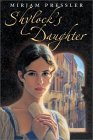
I always try to use books written during or about the time period we are studying, and just by chance, I discovered the young adult novel Shylock's Daughter by Mirjam Pressler. Based on Shakespeare's play, Shylock's Daughter presents the story from the perspective of four different characters: Shylock, his daughter Jessica, an adopted daughter raised as Jessica's sister but now Jessica's maid, and the housekeeper (the last two characters are Pressler's creation). Through Jessica, the city of Venice comes alive and the Ghetto becomes both a sanctuary and a prison. Through each of the major characters, we get a different perspective of Judaism. Shylock represents the importance of the Law; his housekeeper maintains the rich traditions and superstitions. Jessica rebels against her faith but cannot abandon it entirely. Amalie, the adopted daughter, struggles to make Judaism her own in a dangerous world that is constantly changing. Amalie, perhaps, is the daughter of the title. At the story's end, she begins a journey to Palestine, carrying the hope and promise of Judaism in her heart.

After reading Shakespeare's Daughter, we moved onto Manga Shakespeares' Merchant of Venice. As I mentioned in my previous post, this is a highly interpretive and abridged retelling, with definite anti-Semitic overtones. Shylock, for instance, is depicted as evil, and has an almost demonic appearance. Critics have debated whether Shakespeare was anti-Semitic. My daughter and I certainly debated it, and had some wonderful conversations about bigotry, prejudice and hatred.

Finally, we watched a DVD of the BBC 1980 production Shakespeare's Comedies: The Merchant of Venice starring Gemma Jones as Portia (she was excellent). My daughter was able to follow the play and really enjoyed it. In this production, scenery is quite spare, and the story depends on the actors' abilities and on Shakespeare's words. The beauty of his words lives on!

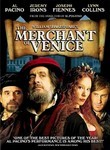
A quick word about the 2004 movie starring Al Pacino: My husband and I watched this and really enjoyed it. Al Pacino is fantastic as Shylock and gives a truly masterful performance. The casting and scenery is excellent and the movie really makes Shakespeare very accessible. Despite the fact that the DVD comes with a teacher's guide, this movie is R-rated for a reason! The relationship between Bassanio and Antonio takes on a decidedly homosexual nature (which may or may not have been intended in the original, but certainly helps to explain Antonio's depression and motivation). One scene occurs in a brothel, and shots of bare-breasted women are interspersed throughout. We were very disappointed that we could not share this fine drama with our 11 year old daughter; as always, you must decide for yourself.

Friday, January 1, 2010

Teaching Shakespeare

Recently while lunching with home school friends, one of the children said something abut reading graphic novels. I mentioned that last year, we used mangas to introduce Shakespeare's plays. My friend responded "What a good idea!"

Well, I was a little surprised, because I didn't think we did anything special. Surely, others have considered the use of mangas and graphic novels to introduce classic literature; within the library world, mangas have been a hot topic for some time now, and many libraries are quickly adding them to their collections. See the American Library Association's Great Graphic Novels for Teens. Titles include biographies, science, history, and fiction.

Mangas are basically a Japanese comic book. They have a very distinctive artistic style, and they are often made into anime (cartoons). Graphic novels are a Western version, and even old standards like the Hardy Boys mysteries are being adapted. Manga forms of Shakespeare are generally abridged versions of the original, and the art work is highly interpretive. For instance, in the Manga Shakespeare The Merchant of Venice, Shylock is given an evil, elfin appearance (to which I take exception--its very antisemitic). (Manga Shakespeare is a registered trademark for a manga publisher. I avoid their web site: It shuts my computer down every time! The publisher I prefer is Amulet Books.)

With their limited text and lively illustrations, mangas appeal to kids in general, reluctant readers, and those with reading problems or learning disabilities. And let's face it, Shakespeare is not easy reading, especially for a middle school student. So mangas are a wonderful way to introduce Shakespeare.

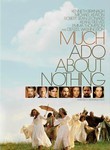
We started with Much Ado about Nothing, one of my favorites. The DVD starring Kenneth Branagh and Emma Thompson brings the play to life. Beautifully filmed in the warm Italian sun, Branagh and Thompson make the play incredibly accessible and fun to watch. My daughter loved it and watched it twice! The Manga Shakespeare was not available at that time (it was published in August, 2009).


Othello was much more challenging. We started by reading Othello, A Novel by Julius Lester (better known for his picture books). His retelling from an African-American perspective focuses more attention on the racial aspects of the story. Considered Young Adult literature, the book is very readable. We then took a look at the Amulet Manga, and read the play. I wanted to use the 1995 movie starring Kenneth Branagh and Laurence Fishburne, but its rated R. My husband and I watched it and enjoyed it, but we agreed that it was not appropriate for middle schoolers. Upper-level high school students might enjoy it, but parental discretion is advised.

The last play we studied was A Midsummer Night's Dream. My daughter found the Amulet Manga a little difficult to follow, so I would advise telling your students the story first, so that they are familiar with the plot. We then watched the movie version starring Calista Flockhart, Kevin Kline, and Michelle Pfeiffer. This is a very goofy, silly adaptation, set in the Victorian era, which uses bicycles as a major prop. A Midsummer Night's Dream is Shakespeare at his bawdiest (afterall, he appealed to the masses--as I explained to my daughter, his plays were like our blockbuster movies), and this adaptation lives up to it. Very silly, but fun. Rated PG-13, use your discretion.

On my next post, I will talk about The Merchant of Venice, which I taught with history, rather than with our literature studies.

Thursday, December 24, 2009

See the Front Page of Newspapers from Around the World

Here's a quick one that student's will find fun and interesting:

View the front page of newspapers from all around the country and all around the world at Newseum an interactive museum in Washington DC that chronicles five centuries of news with hands-on exhibits and multimedia displays. The museum emphasizes the role of media in reporting and in creating the news.

Parents may want to look at free lesson plans under the education tab. On the left side menu, click on Resources for Teachers and then Lesson Plans.

Older students may enjoy exploring this website on their own.

Tuesday, December 15, 2009

Web 2.0 Applications for the Musically Inclined

Recently, a reader commented that her daughter is very interested in music and technology. There are a number of online applications for music creation that students will enjoy. Piano and music teachers will find these programs innovative and useful, too!

NoteFlight is an online music notation system which enables users to compose, create, view, and hear music notation, collaborate with others, and share their music. The application is free for individual users and does not require you to download anything. Music teachers may be interested in Noteflight Learning Edition which works with the Haiku Learning Management System. With this fully web-based system, music teachers can post assignments, assess student work, lead class discussions, engage in online music composition and more. Noteflight Learning Edition does have a fee schedule based on number of classes and students, but does not require any downloads. I am definitely not a musician (as you will be able to tell from this demo I made):

Thounds is an online music platform and social network where you can record your original music just by using a microphone or plugging your instrument into your computer. Once you post your sample, other users from all around the world can add to or contribute to your basic recording. The idea is to share musical ideas and inspiration and to collaborate with others to create original music. Again, it's free and there's no downloading! Watch this demo from the Thounds web site.


Kisstunes enables users to create and record tunes online using their qwerty keyboard. Easy-Peasy! You can store your work online and share with family and friends. Again, it's free, free, free, and no downloads!

JamStudio The Online Music Studio allows you to create and mix your own music, add instrumentation,and experiment with different styles and sounds. Accounts are free; however, with an inexpensive 6 month all access pass*, you own the rights to the songs you create and can have MP3 mixes mailed to you for unlimited use. Educational grants are available for classroom use. I have emailed JamStudio about grants for homebschoolers, and will post an update when I receive a reply.

* Always, always, always read the Terms of Use, Privacy Policy, and Policies and Procedures for Copyright violation (all may be included in one statement or they may be in separate statements). Some of these sites retain the right to use your creation on their web site or in their network of services. Before you share or allow others to edit, add to, or change your music, make sure you understand your rights to the content you create and how it may be used by others.