Friday, January 29, 2010

The Roman Mysteries


My son's obsession with Greek mythology led us to the serendipitous discovery of The Roman Mysteries by Caroline Lawrence, a series of 17 stories set in Rome, 79 AD. (An additional 7 books support the series.) Flavia Gemina, 10 year-old daughter of a Roman sea captain, solves spine-tingling mysteries with her three friends; Jonathon, son of Mordecai, one of the first Messianic Jews; Nubia, a former slave; and Lupus, an orphan they have befriended. Incorporating both Greek and Roman mythology, The Roman Mysteries are meticulously researched and incorporate historic events, people, and architecture. Each book includes a glossary of Latin words, names, and places, and brief description of the historic event central to each story.

My son loves these books and has waited impatiently for each to arrive through inter-library loan. My 12 year-old daughter reads them just as eagerly. A BBC television series is based on these books,and the DVDs for the first two seasons are available throughAmazon.com. Also visit The Roman Mysteries web site for more information about the books, their author, school-related activities, audio samples, the author's blog, and instructions for making a Roman costume.

Recommended for ages 7-14. If you are studying Ancient History, be sure to include these books in your child's accompanying reading.

Wednesday, January 27, 2010

Shmoop

Here's another great online resource for home schoolers: Shmoop! It provides lessons, background, summaries, and analysis for literature, poetry, history, civics, biography, music, and bestsellers. All of the information is written by the faculty, PhD students, and Masters students at Harvard, Berkeley, Stanford and other universities in an easy to read, conversational tone. In their poetry section, they have a guide to reading poetry, a glossary of poetry terms, and study guides for 77 major poems! Full texts of the poems are also provided. I wish I had known of this resource when we were studying The Rime of the Ancient Mariner last week, and we will definitely use it next week when we study Wordsworth and later this spring when we read Pride and Prejudice.


Almost all of the content is free! Teacher lesson plans can be purchased for $5.99 per lesson, but home educators will find sufficient information and resources without making any purchase.

Check it out:

Monday, January 18, 2010

Black History Month

Although I believe that African-American history should be taught part and parcel with American history, February is Black History Month and today is Martin Luther King Day. In honor of the men and women who have contributed so much to our country, and who deserve to be included in our national consciousness of who we are--not relegated to one particular day or several weeks--I am sharing a number of wonderful resources well-worth exploring. Please note that my list is not exhaustive, nor does it provide a complete history, but it is certainly a good place to start.

Please see my wiki whitneyswikiways for a list of picture books, chapter books, poetry, videos and websites.

Below are a number of excellent web sites.

Civil Rights Legislation

Civil Rights Center
FindLaw for the Public

A collection of articles and resources on the topic of Civil Rights. Links lead to legal definitions, specific types of discrimination, and a timeline of significant events. Information is provided from a legal perspective, and links to relevant Constitutional Amendments, federal and state law, and litigation are included. The site is very easy to use and written for the lay person, providing both depth and breadth of information. For those wanting detailed information about a specific subchapter or section of a law, links are provided to FindLaw for Legal Professionals.

Primary Documents/Curricula

Teaching Documents/Lesson Plans
The National Archives

This website, part of the National Archives Education service, provides detailed lesson plans that are correlated to National History Standards and National Standards for Civics and Government. All lesson plans are based on primary documents and can be accessed by clicking on “Lessons by Era 1945 to 1970s” or one of the bulleted topics (“Civil War and Reconstruction” or “Postwar United States”). Lesson plans are available for specific topics, such as the arrest records of Rosa Parks or letters and telegrams to the President from Jackie Robinson. Background information and pictures of relevant documents are provided along with creative, thought provoking teaching activities and suggestions for using the documents. All necessary worksheets are provided as PDFs.

The Selma to Montgomery National Historic Trail Resources for Teachers
The National Archives

Part of the Never Lose Sight of Freedom project, this website provides detailed lesson plans along with teaching materials, historical documents and photographs, transcripts of speeches and personal histories, and the text of associated laws and court decisions. An online video of the March is also available. Links to other websites, including the Spider Martin Photo Gallery of the 1965 Montgomery Voting Rights March and the National Voting Right Museum are provided. All lesson plans include all necessary materials in html and PDF versions, and were written by Alabama teachers whose qualifications are provided following each lesson.

The King Papers Project
The Martin Luther King Jr. Research and Education Institute, Stanford University

Since 1985, the King Papers Project has been editing and publishing the works of Dr. King. The site includes transcripts and some audio of Dr. King’s sermons and speeches, excerpts from his autobiography, and numerous scholarly articles about Dr. King. A comprehensive encyclopedia of the Civil Rights Movement and an inventory of Dr. King’s sermons, speeches, letters, publications, notes and outlines are also provided. The website provides the Liberation Curriculum, an educational resource for high school teachers which includes lesson plans and classroom resources.

Virtual Tours

We Shall Overcome: Historic Places of the Civil Rights Movement--A National Register of Historic Places Travel Itinerary
U.S. Department of Interior, National Park Service, U.S. Department of Transportation, The Federal Highway Administration, and the National Conference of State Historic Preservation Officers.

In addition to a brief history of the Civil Rights Movement, this site provides a map and a list of places associated with the movement. Links lead to a page for each place on the map or list. Each page includes pictures of the place and people associated with events at that location, and an explanation of the location’s significance in the Civil Rights Movement. Internal links lead to biographies, explanations of events, and other historic places. Links to the National Park Service and the National Register of Historic Places are also included. A bibliography of histories, biographies, autobiographies, reference sources and other web resources is provided.

Voices of the Civil Rights

The Leadership Conference on Civil Rights and the Library of Congress

This site chronicles the Voices of Civil Rights Bus Tour which retraced the route of the 1961 Freedom Riders, and includes videos from stops and events along the route. Voices of the Civil Rights collected thousands of personal stories and oral histories of individuals involved in the Civil Rights Movement. These stories will be housed at the Library of Congress, but are available from archives in the website. A timeline of events, music, video, introduction to new activists, and evaluations of the civil rights movement in the present and future are included. Links are provided for other oral history projects, websites and other online resources, and books.

Online Exhibits/Museums

National Civil Rights Museum
National Civil Rights Museum, Memphis, TN

In addition to providing information about the museum (hours, location, etc.), this website has an online exhibition which includes pictures and written material about major events and brief biographies about people in the movement. The museum’s annual Freedom Awards, honoring people who have made significant contributions to the advancement of civil rights nationally and internationally, are archived and include brief biographies of the recipients.

African-American Oddyssey

The Library of Congress

This website is an online exhibit based on a 1998 exhibition at the Library of Congress which showcased the Library’s African American Collection in all three of the Library’s buildings. The exhibit divides the history of African Americans into nine sections which include Slavery, the Civil War, Reconstruction and the Depression. The ninth section focuses on the Civil Rights Movement which presents documents, artwork, and photographs of people and events along with descriptive narrative. The site includes a complete list of objects included in the exhibition with links to items found in the online exhibit and to the LC division where the item is housed.

Martin Luther King, Jr.

Martin Luther King, Jr.
The Seattle Times

In addition to providing links to articles and commentary about Martin Luther King, Jr., published in the Seattle Times, this website includes a photo gallery and biography of the Civil Rights leader. A timeline details significant events in Dr. King’s life, as well as in the Civil Rights movement. Links are provided to audio and transcripts of Dr. King’s speeches and written work, including “I Have a Dream” and “Letter from a Birmingham Jail”. A study guide, quiz, and list of resources are also included.

If you have gotten all the way through this list, don't forget to look at my wiki where you'll find all kinds of picture books appropriate for all ages (nobody is ever too old for a read aloud).

Sunday, January 17, 2010

Percy Jackson and the Olympians


The Lightning Thief , the movie, is due out in February, and my kids can't wait!

The movie is based on the five-book series Percy Jackson and the Olympians by Rick Riordan. My 9-year old son read all five of them last fall in about 2 weeks. I couldn't tear him away from those books! Ever since, his all consuming interest has been Greek and Roman mythology. I think he has read every book the library has on Greek and Roman mythology, and has branched out into Norse mythology. Any home schooler basing their curriculum on The Well-Trained Mind knows that mythology is required reading.

The gods still rule--from high atop the Empire State Building in New York City-- and they still fall in love with humans with whom they have children. Children who are demi-gods: half god, half human. Percy is one such child, although he doesn't know it until he is attacked by a school teacher turned Harpy and fights off a raging Minotaur!

I'm reading the books to my children, and they are enjoying them just as much as the Harry Potter Series. The boy I take care of after school, who doesn't particularly like reading and wasn't interested in having storytime, asks if we can read another chapter as soon as I pick him up every afternoon. These stories are page turners, and every child who has ever been the underdog or picked on by other kids will laugh out loud when Percy turns the tables.

Friday, January 8, 2010

Manga and The Merchant of Venice

Last year, we studied The Merchant of Venice with history rather than with English literature. In history, we had been studying European trade, the city-state of Venice, and the reconquest of Muslim Spain by the Catholic Spanish (which led up to the Inquisition). We augmented our studies with The Atlas of Great Jewish Communities: A Voyage Through History by Sondra Leiman, Unit II, Sephardic Jewry. The Merchant of Venice seemed like the perfect way to sum up and review some of what we had learned.

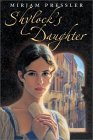
I always try to use books written during or about the time period we are studying, and just by chance, I discovered the young adult novel Shylock's Daughter by Mirjam Pressler. Based on Shakespeare's play, Shylock's Daughter presents the story from the perspective of four different characters: Shylock, his daughter Jessica, an adopted daughter raised as Jessica's sister but now Jessica's maid, and the housekeeper (the last two characters are Pressler's creation). Through Jessica, the city of Venice comes alive and the Ghetto becomes both a sanctuary and a prison. Through each of the major characters, we get a different perspective of Judaism. Shylock represents the importance of the Law; his housekeeper maintains the rich traditions and superstitions. Jessica rebels against her faith but cannot abandon it entirely. Amalie, the adopted daughter, struggles to make Judaism her own in a dangerous world that is constantly changing. Amalie, perhaps, is the daughter of the title. At the story's end, she begins a journey to Palestine, carrying the hope and promise of Judaism in her heart.

After reading Shakespeare's Daughter, we moved onto Manga Shakespeares' Merchant of Venice. As I mentioned in my previous post, this is a highly interpretive and abridged retelling, with definite anti-Semitic overtones. Shylock, for instance, is depicted as evil, and has an almost demonic appearance. Critics have debated whether Shakespeare was anti-Semitic. My daughter and I certainly debated it, and had some wonderful conversations about bigotry, prejudice and hatred.

Finally, we watched a DVD of the BBC 1980 production Shakespeare's Comedies: The Merchant of Venice starring Gemma Jones as Portia (she was excellent). My daughter was able to follow the play and really enjoyed it. In this production, scenery is quite spare, and the story depends on the actors' abilities and on Shakespeare's words. The beauty of his words lives on!

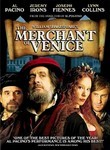
A quick word about the 2004 movie starring Al Pacino: My husband and I watched this and really enjoyed it. Al Pacino is fantastic as Shylock and gives a truly masterful performance. The casting and scenery is excellent and the movie really makes Shakespeare very accessible. Despite the fact that the DVD comes with a teacher's guide, this movie is R-rated for a reason! The relationship between Bassanio and Antonio takes on a decidedly homosexual nature (which may or may not have been intended in the original, but certainly helps to explain Antonio's depression and motivation). One scene occurs in a brothel, and shots of bare-breasted women are interspersed throughout. We were very disappointed that we could not share this fine drama with our 11 year old daughter; as always, you must decide for yourself.

Friday, January 1, 2010

Teaching Shakespeare

Recently while lunching with home school friends, one of the children said something abut reading graphic novels. I mentioned that last year, we used mangas to introduce Shakespeare's plays. My friend responded "What a good idea!"

Well, I was a little surprised, because I didn't think we did anything special. Surely, others have considered the use of mangas and graphic novels to introduce classic literature; within the library world, mangas have been a hot topic for some time now, and many libraries are quickly adding them to their collections. See the American Library Association's Great Graphic Novels for Teens. Titles include biographies, science, history, and fiction.

Mangas are basically a Japanese comic book. They have a very distinctive artistic style, and they are often made into anime (cartoons). Graphic novels are a Western version, and even old standards like the Hardy Boys mysteries are being adapted. Manga forms of Shakespeare are generally abridged versions of the original, and the art work is highly interpretive. For instance, in the Manga Shakespeare The Merchant of Venice, Shylock is given an evil, elfin appearance (to which I take exception--its very antisemitic). (Manga Shakespeare is a registered trademark for a manga publisher. I avoid their web site: It shuts my computer down every time! The publisher I prefer is Amulet Books.)

With their limited text and lively illustrations, mangas appeal to kids in general, reluctant readers, and those with reading problems or learning disabilities. And let's face it, Shakespeare is not easy reading, especially for a middle school student. So mangas are a wonderful way to introduce Shakespeare.

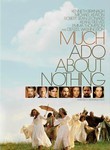
We started with Much Ado about Nothing, one of my favorites. The DVD starring Kenneth Branagh and Emma Thompson brings the play to life. Beautifully filmed in the warm Italian sun, Branagh and Thompson make the play incredibly accessible and fun to watch. My daughter loved it and watched it twice! The Manga Shakespeare was not available at that time (it was published in August, 2009).


Othello was much more challenging. We started by reading Othello, A Novel by Julius Lester (better known for his picture books). His retelling from an African-American perspective focuses more attention on the racial aspects of the story. Considered Young Adult literature, the book is very readable. We then took a look at the Amulet Manga, and read the play. I wanted to use the 1995 movie starring Kenneth Branagh and Laurence Fishburne, but its rated R. My husband and I watched it and enjoyed it, but we agreed that it was not appropriate for middle schoolers. Upper-level high school students might enjoy it, but parental discretion is advised.

The last play we studied was A Midsummer Night's Dream. My daughter found the Amulet Manga a little difficult to follow, so I would advise telling your students the story first, so that they are familiar with the plot. We then watched the movie version starring Calista Flockhart, Kevin Kline, and Michelle Pfeiffer. This is a very goofy, silly adaptation, set in the Victorian era, which uses bicycles as a major prop. A Midsummer Night's Dream is Shakespeare at his bawdiest (afterall, he appealed to the masses--as I explained to my daughter, his plays were like our blockbuster movies), and this adaptation lives up to it. Very silly, but fun. Rated PG-13, use your discretion.

On my next post, I will talk about The Merchant of Venice, which I taught with history, rather than with our literature studies.

Thursday, December 24, 2009

See the Front Page of Newspapers from Around the World

Here's a quick one that student's will find fun and interesting:

View the front page of newspapers from all around the country and all around the world at Newseum an interactive museum in Washington DC that chronicles five centuries of news with hands-on exhibits and multimedia displays. The museum emphasizes the role of media in reporting and in creating the news.

Parents may want to look at free lesson plans under the education tab. On the left side menu, click on Resources for Teachers and then Lesson Plans.

Older students may enjoy exploring this website on their own.

Tuesday, December 15, 2009

Web 2.0 Applications for the Musically Inclined

Recently, a reader commented that her daughter is very interested in music and technology. There are a number of online applications for music creation that students will enjoy. Piano and music teachers will find these programs innovative and useful, too!

NoteFlight is an online music notation system which enables users to compose, create, view, and hear music notation, collaborate with others, and share their music. The application is free for individual users and does not require you to download anything. Music teachers may be interested in Noteflight Learning Edition which works with the Haiku Learning Management System. With this fully web-based system, music teachers can post assignments, assess student work, lead class discussions, engage in online music composition and more. Noteflight Learning Edition does have a fee schedule based on number of classes and students, but does not require any downloads. I am definitely not a musician (as you will be able to tell from this demo I made):

Thounds is an online music platform and social network where you can record your original music just by using a microphone or plugging your instrument into your computer. Once you post your sample, other users from all around the world can add to or contribute to your basic recording. The idea is to share musical ideas and inspiration and to collaborate with others to create original music. Again, it's free and there's no downloading! Watch this demo from the Thounds web site.


Kisstunes enables users to create and record tunes online using their qwerty keyboard. Easy-Peasy! You can store your work online and share with family and friends. Again, it's free, free, free, and no downloads!

JamStudio The Online Music Studio allows you to create and mix your own music, add instrumentation,and experiment with different styles and sounds. Accounts are free; however, with an inexpensive 6 month all access pass*, you own the rights to the songs you create and can have MP3 mixes mailed to you for unlimited use. Educational grants are available for classroom use. I have emailed JamStudio about grants for homebschoolers, and will post an update when I receive a reply.

* Always, always, always read the Terms of Use, Privacy Policy, and Policies and Procedures for Copyright violation (all may be included in one statement or they may be in separate statements). Some of these sites retain the right to use your creation on their web site or in their network of services. Before you share or allow others to edit, add to, or change your music, make sure you understand your rights to the content you create and how it may be used by others.

Wednesday, December 9, 2009

Animoto.com

Here is another exciting use of Web 2.o technology for educational purposes. After researching the Baroque Period, my daughter created this Animoto to demonstrate her new knowledge.


Animoto enables users to create short videos or trailers from images or video clips uploaded from their own cameras or from web sites. Then, they can add text and musical accompaniment, either from their own collections or from Animoto's collection, and Animoto creates a professional, animated mix.The process is incredibly quick and easy, and very easy to learn. My daughter grumbled and complained when I first gave her this assignment, thinking it would be really difficult, but her resentment quickly turned to excitement when she realized how easy Animoto is. In order to create a full-length video like this, you have to buy an account ($30 for one year of unlimited videos); however, you can make short, 30 second videos for free!

I have posted the instructions for the Baroque Art Animoto Assignment to my wiki: whitneyswikiways, along with the grading rubric, the written portion of the assignment, and my daughter's references. The written portion is my daughter's analysis and reflection. In the first part, she had to answer specific questions about the Baroque period. Just telling her to find images of Baroque art and architecture would be pointless. She would do a Google search for images and never bother to learn anything. Requiring her to write an analysis forced her to do some research, take some notes, and actually learn something. The reflection gave her an opportunity to think about what she had learned, the research process, and her use of technology.

Requiring a reference page is incredibly important: We need to teach our children respect for for others' intellectual property. We should not allow them to write a report or use images without providing information about their sources. Whenever a student uses a quote, someone else's ideas, or someone's artistic work, they need to provide a citation. I am teaching my daughter APA style. MLA is also an option. Even young children can provide basic information like the author's name and the title of the work.

I encourage you to experiment with Animoto and the other Web 2.0 applications I've highlighted in my blog.

Sunday, December 6, 2009

Hanukkah Books

Visit my wiki for reviews of my favorite Hanukkah books. Every year, we read a Hanukkah book on each of the eight nights of Hanukkah. I always try to find new ones to add to our collection; however, some, like Eric Kimmel's Herschel and the Hanukkah Goblins, we greet like old friends when they come to celebrate the holiday with us. Our latka recipe comes straight out of Granma's Latkes, and one year, The Ugly Menorah inspired my children to make their own hanukkiahs.

For each book on my list, I have provided a link to the author's or illustrator's web site (when available), publisher information, and an age or grade recommendation. Remember to check back, because I will update the list as I find new favorites.

Wednesday, December 2, 2009

More Skills Students Need to Succeed

In my last post, I talked about the importance of giving our home schooled children tests. Being successful on tests requires the development of important skills which will serve our children well in college and beyond.

What are some other skills they need?

This question can be explored from two perspectives: 1) what skills will they need in college, and 2) what skills will they need to succeed in the work place? These questions are deceptively simple. The first focuses on academic skills such as being able to listen to a lecture, take notes, read a textbook or other written material, and engage in self-directed study. The second draws attention to important vocational skills like punctuality, following directions, and getting along with co-workers. When we consider the work environment of the 21st century and the explosion of information, the questions become more complex.

The amount of information in the world is growing at an exponential rate. According to How Much Information? 2003, a study by two scientists at Berkeley, new stored information grew by 30% between 1999 and 2002 and 92% of new information is stored magnetically (primarily on hard discs). This study is now 6 years old, and you know information continues to expand. According to information management industry experts, the amount of information produced annually between 2006 and 2010 was expected to increase more than six times, and the amount of digital information doubles every 18 months.

Our children are growing up in a world in which information is proliferating and more and more communication is digital (through computers, cell phones, laptops, palm pilots, etc). In this world, the goal of education can no longer be knowledge mastery-- there is just too much information, and that information constantly is changing. Consequently, our goal should be to teach our children how to learn rather than what to know.

Our children need to learn:
  • how to ask questions
  • how to find high-quality, relevant information, in both print and digital formats
  • how to evaluate and interpret information
  • how to analyze and synthesize information to produce new understanding (or knowledge)
  • how to use technology to find information and to create information products
  • how to collaborate both in-person and on the Web
The Partnership for 21st Century Skills identify 3 sets of skills students need: Life and Career Skills

1. Learning and Innovation Skills
  • Creativity and Innovation
  • Critical Thinking and Problem Solving
  • Communication and Collaboration
2. Information, Media and Technology Skills
  • Information Literacy
  • Media Literacy
  • Information, Communications, and Technology Literacy
3. Life and Career Skills
  • Flexibility and Adaptability
  • Initiative and Self-direction
  • Social and Cross-Cultural Skills
  • Productivity and Accountability
  • Leadership and Responsibility
The International Society for Technology in Education identifies six separate skill sets necessary to succeed in the 21st century including: Creativity and Innovation; Communication and Collaboration; Research and Information Fluency; Critical Thinking, Problem Solving and Decision Making; Digital Citizenship; and Technology Operations and Concepts.

So what should we be teaching our children? Skills! Of course children do need to learn content. They need a base of knowledge against which to evaluate new information and learning, but more importantly, they need to learn how to learn! Our job as home schooling parents is not just to teach them history, science and math. Our job is to use these core subject areas as jumping off points for directed inquiry, guiding our children through the process of raising a question, finding relevant information, evaluating the quality of that information, and analyzing and synthesizing that information to create new knowledge. By preparing our children for the 21st century, we will be creating independent thinkers and problem solvers who are ready to participate in our democracy.

Friday, November 20, 2009

Test taking and home schooling

More than a month has gone by since I last posted. Sometimes, life gets busy, especially when you're home schooling, attending school yourself, caring for a friend's child, and making sure everyone gets to their activities and sports. Somehow, pursuing my extracurricular activities always comes last (and every once in a while, I need to get some sleep). I'm sure home schooling parents everywhere know what I'm talking about. The first home schooling conference I attended offered multiple workshops on time management. I should have known then that life was about to change!

Something that has been on my mind lately is the role of testing in the home schooling curriculum. So many parents have told me that they do not test their children. Many of them have good reasons (or perhaps they have good rationalizations). Some use the Socratic method and believe conversation provides them with an adequate measure of student learning. Others are unschooling. Still others say that their child does not respond well to testing for a variety of reasons: learning problems or disabilities, the stress of testing, tests' inability to measure actual learning, or memory problems. Some of these reasons may be valid, and home schooled students who are not given tests may learn just as well as home schooled students who are. Nevertheless, I can't help wondering if we are doing our children a disservice by not testing.

When developing my child's curriculum, I always think about our educational goals for her. Most simply, we want her to attend the college of her choice and to have a career that is financially, intellectually, and socially rewarding. (Of course, we have other goals for her as well, which I may share in a future post about life-long learning. Keep an eye out for it.)

Given these goals, what are the skills she needs in order to attain them? More specifically, what are the academic skills? Like it or not, she has to know how to take tests (among other things). In order to get into college, she will have to take the PSAT, SAT, and possibly the ACT. Once in college, she will have to take mid-term exams and final exams. If she opts for graduate schools, she may have comprehensive exams and orals.

Taking tests requires skills. Why do you think public schools are so busy teaching children how to fill in the little circles? Multiple choice tests require students a) be able to read, b) evaluate possible answers based on their knowledge and memory, and c) rule out unlikely answers, and d) choose the best answer. Fill-in the blank tests require recall. Short answer tests require knowledge and application. Essay tests often require the analysis and synthesis of information in order to produce a logical, well-organized response. Preparation for midterm and final exams require the student to master large amounts of information, have it available for recall, and be able to produce it when needed.

If I never test my child, how is she to develop these skills? How will she learn the necessary study skills? By giving her tests (and this year, I introduced mid-term exams), I am helping her to acquire organizational and study skills. She is learning to take notes as she reads materials; to create outlines; to review material and quiz herself; to use flashcards, charts and other graphic organizers; to develop hypothetical questions and answer them. She is learning to keep an organized notebook in which she can quickly and easily locate important information. By sometimes setting a time limit on a test, I am teaching her how to pace herself, to prioritize, and to use her time well. In response to short answer questions, she must identify the most relevant information and produce it. When responding to essay questions, she must synthesize her new knowledge to produce a coherent, well-organized argument supported by examples. She must learn how to "think on her feet".

Most importantly, she is learning self-discipline because studying for tests requires a great deal of self-discipline. Sure, she would rather be playing a computer game or reading a book in her spare time, but she is learning to postpone that short-term gratification in order to achieve her goals.

Home schooling provides parents the opportunity to do things differently from the traditional public school. We can tailor the curriculum and teaching methods to meet the needs of our individual children, but we must also provide them with the skills they will need to succeed outside of our homes. If your child is college-bound, test-taking is an important set of skills.

Monday, October 19, 2009

Blogs, The FTC, and Disclosure

Controversy has been swirling since the Federal Trade Commission (FTC) issued its revised "Guides Concerning the Use of Endorsements and Testimonials in Advertising" which applies regulations regarding endorsements and testimonials to online publications including blogs and social networking applications like Facebook and Twitter. The FTC maintains that people writing online should disclose any material relation with the sellers of a product or service. For instance, someone posting a book review should reveal whether they received the book, other goods, or compensation from that book's publisher. The goal is to apply truth in advertising to bloggers and other online publishers.

An opinion piece in today's Wall Street Journal (October 19, 2009) "Bloggers Mugged by Regulators"by Information Age columnist L. Gordon Crovitz raises serious questions about the effect of these guidelines on the First Amendment Right to Free Speech. Should people writing on the Internet have less freedom than those writing in other media? The Wall Street Journal daily publishes a book review; the authors of these reviews do not reveal their relationship to the publisher or author of the book or whether they received a copy of the book for free. Should writers on the web be required to make a disclosure?

On the other hand, bloggers who receive payment for product endorsements are advertising, and shouldn't they come under the same regulations as other advertisers? See Is that blogger review really a paid ad? The FTC wants to know on ConsumerReports.org for a discussion on this topic.

A full analyis of the FTC Guides and their implication for bloggers can be found at Andy Sernovitz blog. Sernovitz, the author of Word of Mouth Marketing, is an expert on interactive marketing.

For the record, I do not receive compensation, payment, or free samples from the publishers or manufacturers of any of the products I discuss in my blog. All book reviews and demonstrations of Web 2.0 applications are based solely on my experience with these products, and are in no way, shape, or form paid advertising.

Wednesday, October 7, 2009

Philadelphia Photo Story and Copyright Law

At last, my daughter's Photo Story about visiting The Brandywine Battlefield, Valley Forge and historic Philadelphia!


Song credit: Fennell, F. & The Eastern Wind Ensemble. "Yankee Doodle - Field Music of the US Army ". God Bless America--The Ultimate Patriotic Album. 2002. MP3

This Photo Story took a little longer because I had to learn how to a) download a song from iTunes, b) burn that song to a disc, and c) rip it from my disc to save to my computer. Why? Because even though I purchased the song, iTunes uses Digital Rights Management technology to impose limits on the use of digital content. This prevents the user from playing an iTune on a non-Apple player. It also prevents the user from copying the song directly to Windows Media Player. Fortunately, there is a way to do it. Then, its an easy matter to upload the music from the computer to Photo Story 3.

Copyright Law and Fair Use
Is all of this legal? Ethical? Well, the whole point of copyright protection is to protect the intellectual and creative property rights of an author, composer, artist, or creator. According to Dictionary.com, copyright is "the legal right granted to an author, a composer, a playwright, a publisher, or a distributor to exclusive publication, production, sale, or distribution of a literary, musical, dramatic, or artistic work". So, technically, even though I purchased this piece of music and provided attribution (a citation), I may be violating copyright law by distributing it on the Internet as a part of my daughter's Photo Story.

But what if I'm using the copyrighted material for education purposes? This is where things get a little tricky. Many educators believe that they can use copyrighted materials under the Fair Use doctrine as long as that use is restricted to instruction. This is not quite true. There are four factors one must consider when determining Fair Use:

1. the purpose or character of the use (i.e., is it for non-profit educational use?),
2. the nature of the copyrighted work (i.e., was it published, out of print, or factual?),
3. how much of the original work was used, and
4. the potential impact on the market for the original work.

In this case, the answers are:

1. the purpose of the use is educational (both for my daughter learning how to use the technology and in this blog which is written for educational purposes),
2. the nature of the work is a creative, published work; however, the song "Yankee Doodle" could be argued to be in the public domain,
3. The entire work was used (twice; typically, the 10% rule should be followed: only 10% or less of the cited work should be used), and
4. the potential impact on the market for the song is negligible.

Based on this analysis, the use of "Yankee Doodle" in this case would most likely be considered legal, but you never know.

Home schoolers using music or other creative works for the purpose of educating their own children probably do not need to worry about copyright law; however, Education World has a wonderful series of articles explaining copyright law and Fair Use.

Tuesday, September 22, 2009

Our trip to Philadelphia

Recently, we went on an extended field trip to Philadelphia. My husband had a conference to attend, and the kids and I tagged along to go sightseeing. It was the perfect opportunity to see Independence Hall, the Liberty Bell, and the Betsy Ross house. We have not reached this period in history yet, but we had the opportunity and took advantage of it.

On the first day of our trip, we drove out to Kennett Square in the historic Brandywine Valley, about 45 outside of Philly. Kennett is the home of Longwood Gardens. Pierre duPont, of the duPont chemical company, purchased the land in 1906 from Quaker farmers to preserve an arboretum. He added classical gardens, water fountains, a conservatory, an outdoor theater meadows, and ponds to create the foremost horticultural showplace and educational center in the United States.

When I first told my children we would be visiting Longwood Gardens, they rolled their eyes and groaned, but boy, were they in for a surprise! With its tree houses, fountain show, indoor childrens' garden, model train garden, giant lily pads, banana trees, topiary garden, and carillon tower, Longwood Gardens won them over. We visited for over four hours, and left only because my children could walk no farther. Below is a photo story, created by my daughter, of our day in the gardens. Unfortunately, the batteries in her camera died, and she was unable to get pictures of the tree houses which were spectacular.


Photo Story 3 is a free microsoft product which you can download to your computer. Upload and alter your photos, add text, narration, and sound, and ta da!!! You have a video. Its very easy to use and a great way to record a field trip, the steps in a science project, or tell a story.

My daughter is currently working on a photo story of Valley Forge and Philadelphia. When it is complete, I will upload it so you all can see the wonderful places we visited in Philadephia.

Monday, September 7, 2009

Report on Captain John Smith

My daughter just completed a biography of Captain John Smith on Glogster! Be sure to click on the blue play button to listen to her narrative.


To view a copy of the assignment, including the grading rubric, visit whitneyswikiways.

Edu.glogster.com is a Web 2.0 application that enables you and your students to create posters that include images, graphics, text, sound recordings, and videos (either your own or something uploaded from schooltube). Students can create posters to illustrate their stories, poetry, book reports, biographies, geographical studies... the possibilities are limited by only their imaginations.

The service is free, and you can enroll up to 200 students in one classroom. As the teacher, you control the account and privacy settings, determine what gets published, flag anything that's inappropriate, moderate comments, etc. Here is a tutorial that will help you get started.

Wednesday, September 2, 2009

Internet Safety

Having posted about some online tools (Voicethread, Voki) and discussed the important role of technology in education, I thought it was about time to discuss Internet Safety for children. In some ways, the Internet is the like the wild, wild west--there's a lot going on out there, few rules, and the U.S. Marshall is no where in sight!

Filters
Several online protection tools are available. Many Internet Service Providers (ISPs) provide parent control options. Your anti-virus and spyware software may also enable you to set some limits on what can be accessed and sent on your computer. Inexpensive filtering software is available. These filters can block sites, prevent personal information from being sent, and monitor and track online activity. Warning: None of these methods are perfect!!! Some inappropriate content may still get through, and many valuable, educational sites may be inadvertantly blocked. If you think you want to go this route, take a look at TopTenReviews for more information.

Guidelines
I'm sure you have seen these before, but they are all worth repeating:
  • Become computer literate: the more you know, the better position you will be in to guide your children's online experience and monitor their online behavior.
  • Keep the computer in a common room (we keep ours in the kitchen, the place I'm most likely to be).
  • Set-up your child's e-mailbox through your account, so you can monitor email if necessary.
  • Spend time online with your children teaching them appropriate behavior.
  • Bookmark the children's favorite websites or your approved websites so your children don't have to search the web. For a list of great websites for kids, see below!
  • Set rules and enforce them (Ours are: No more than 30 minutes computer time/day; Permission must be obtained before going online).
  • Encourage your child to talk to you about anything online that makes them feel uncomfortable, embarrassed or threatened.
  • Report any obscene, threatening, or pornographic content to your ISP, the police, and the FBI.
Teach Your Children
  • Never provide personal information online. OK, this seems obvious to us, but believe me, its not to children. Teach them that personal information includes: the name of the school, the neighborhood, town and state in which they live, the names of their teams and other activities (e.g, " I go to Westside Ballet"), the names of family members, the names of friends, where they go to summer camp....
  • Personal information includes pictures of themselves and their friends! Many children, especially teenagers do not realize this!
  • Create an online identity and use it in chatrooms and social networking sites. For instance, I might call myself "booklover" instead of my real name.
  • Never agree to meet in person someone you meet in a chat room or a social networking site. Aslo, if they give you a phone number, don't call!
  • Never respond to a threatening, scary, inappropriate, or pornagraphic message or email.
  • Always talk to your parent about anything online that frightens them or makes them feel uncomfortable or embarrassed.
Especially for Teens
  • Do not share anything online that you do not want everyone to know or which you might regret. Once something is on the Internet, you no longer have any control of it or how it is used or to whom it sent. You can't take it back.
  • Remember: college admissions committees and employers are now doing online searches on applicants, which includes looking at Facebook and MySpace accounts!
Warning Signs
If you notice any of the following changes in behavior, check it out. Your child may be having online difficulty.
  • Reluctance to talk about online activities.
  • Your child turns off the computer or closes a window whenever you enter the room or walk behind them. Find out why.
  • Your child withdraws from the family or becomes uncommunicative.
  • Your child spends long hours online, especially at night.
  • Your child starts receiving phone calls from people you don't know.
For more information about onlnine safety, go to ConnectSafely.

Social Networking
Social networking is a big part of being a teenager. If your child expresses and interest, check out yoursphere.com,
a site created by a mother of five children. The site goes to extraordinary lengths to protect children. Also see yoursphere for parents for more information about internet and social networking safety.

Terrific Websites for Kids

KNOWITALL.ORG- ETV’s site provides links to many interactive websites for children K-12, as well as sites for teachers and parents.
Awesome Library - kids can find information and activities by grade level or subject. Includes down-loadable worksheets and lessons. Teachers and parents can find lesson plans as well.

International Children's Digital Library - the world's biggest online multicultural repository of children's literature.
ALA's Great Websites for Kids - provides websites chosen by librarians specifically for children. Can be searched by topic; however, a reference desk is also provided.
FirstGov for Kids - Provides links to government websites (e.g., Smithsonian, Library of Congress) by topic and grade level.
KidsClick - Owned by the School of Library and Information Science at San Jose State, this site is a huge database of websites selected by librarians.
Federal Resources for Education Excellence provides more than 1,500 free learning tools and websites for kids and teachers from federal agencies.

Factmonster - a product of Pearson Education, this site provides access to a dictionary, encyclopedia, and almanac, as well as facts about any topic imaginable.

ask for kids - Similar to the site Ask.com for adults, kids can search on a subject in which they are interested and find information.

yahoo for kids - Similar to Yahoo.com for adults, kids can search information here.

Primary search - Contains more than 70 popular full text magazines for kids. Also has a children's encyclopedia and a dictionary.

Thursday, August 27, 2009

The Squire's Tales


Those of you studying the medieval period may enjoy reading The Squire's Tales Series by Gerald Morris, eight books based on the Arthurian legends. I stumbled on to this series by accident last year when my daughter was struggling with Tolkien's Sir Gawain and the Green Knight (recommended by Wise Bauer in The Well-Trained Mind). Tolkien's version is in verse, includes some old English, and is very difficult reading. Morris's retelling, The Squire's Tale, stays true to the original tale, but is so much more fun! Morris creates Terrence, Gawain's squire (and Nimue's nephew), from whose perspective the story is told. Terrence has his own adventures and, like all Arthurian heroes, must go a on a quest, but Gawain's story remains the center of focus. My daughter loved it!

I read the entire series to my children who begged for storytime every night (which made it very easy to get their night-time chores done). I can't tell you how many quests my children went on as we read this book, and my son created endless games involving the characters(King Arthur, Guenevere, Lancelot, Sir Dinadan, Sir Galahad) and mythical beings (the Lady of the Lake, Puck). All of the books are based on an ancient tale: Queste del Saint Graal (Quest for the Holy Grail), Tristam and Iseult, Le Morte de Arthur, etc. At the end of each book, Morris includes a note about the story's provenance and some information about the medieval writers, the time period, or the genre. The American Library Association has included several of the books in their Best Books for Young Adults.

The series includes:

The Squire's Tale
The Squire, His Knight, and His Lady
The Savage Damsel and the Dwarf
(my favorite)
Parsifal's Page
The Ballad of Sir Dinadan
The Princess, The Crone, and the Dung-Cart Knight
(my daughter's favorite: Lancelot is the star of the show)
The Lioness and her Knight
The Quest for the Fair Unknown
(starring Sir Galahad)
The Squire's Quest (due out in September)


More information about Morris and his books can be found at the Children's Literature Network

All images were retrieved August 27, 2009, from the Children' Literature Network at http://www.childrensliteraturenetwork.org/aifolder/aipages/ai_m/morris.html


Thursday, August 20, 2009

Voicethread

Okay, here is some information about Voicethread, one of the American Association of School Librarians' Best Websites for Teaching and Learning.

Voicethread is an online network which allows teachers and students to create multimedia slideshows using images, documents, video, and comments (voice, text, audio file, and video via webcam). You can even "doodle" on a slide to make a point or clarify a comment. Take a look at this voicethread I created as a demonstration for a unit on the solar system. It's a little hokey, but you'll get an idea about the potential of this online technology for creating lectures or lessons, collaborative projects, and student demonstrations of learning. Other examples of educational voicethreads can be found at their library.

Home schoolers will really enjoy the opportunities for collaboration. Because Voicethread is an online network, students around the world can work on a project together, each adding and editing content and comments. Here is a voicethread created by students in Utah (2nd grade), Colorado (9th grade) and Texas (5th and sixth grade) using art, creative writing, and music.

Most of the images in my voicethread were obtained from other websites, which was a little laborious, especially when I created the citations page where I provided the web address for each picture. Now, Voicethread has direct access to 700,000 images from the New York Public Library (NYPL), including primary source materials, maps, photos, drawings, and paintings. They also have access to the Flickr Creative Commons Search where you can find images which are not limited by copyright restrictions. Voicethread enables you to search and import images from NYPL and Flickr, and the links are automatically inserted to make citations and attributions.

Voicethread is a social network; however, you, the parent/teacher, control who has access to your account, and how and with whom your voicethreads are shared. You can moderate all comments, and even have the option to disallow comments.

Here's the best part: You can make unlimited voicethreads for free!!! Who believes it? For $10, you can create groups and have access to the controlled K-12 network. And Voicethread provides wonderful support with tutorials, a help manual, blog, and online help. They are very responsive to email requests for help.