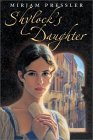
 I always try to use books written during or about the time period we are studying, and just by chance, I discovered the young adult novel Shylock's Daughter by Mirjam Pressler. Based on Shakespeare's play, Shylock's Daughter presents the story from the perspective of four different characters: Shylock, his daughter Jessica, an adopted daughter raised as Jessica's sister but now Jessica's maid, and the housekeeper (the last two characters are Pressler's creation). Through Jessica, the city of Venice comes alive and the Ghetto becomes both a sanctuary and a prison. Through each of the major characters, we get a different perspective of Judaism. Shylock represents the importance of the Law; his housekeeper maintains the rich traditions and superstitions. Jessica rebels against her faith but cannot abandon it entirely. Amalie, the adopted daughter, struggles to make Judaism her own in a dangerous world that is constantly changing. Amalie, perhaps, is the daughter of the title. At the story's end, she begins a journey to Palestine, carrying the hope and promise of Judaism in her heart.
 After reading Shakespeare's Daughter, we moved onto Manga Shakespeares' Merchant of Venice. As I mentioned in my previous post, this is a highly interpretive and abridged retelling, with definite anti-Semitic overtones. Shylock, for instance, is depicted as evil, and has an almost demonic appearance. Critics have debated whether Shakespeare was anti-Semitic. My daughter and I certainly debated it, and had some wonderful conversations about bigotry, prejudice and hatred.
Finally, we watched a DVD of the BBC 1980 production Shakespeare's Comedies: The Merchant of Venice starring Gemma Jones as Portia (she was excellent). My daughter was able to follow the play and really enjoyed it. In this production, scenery is quite spare, and the story depends on the actors' abilities and on Shakespeare's words. The beauty of his words lives on!
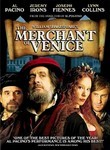 A quick word about the 2004 movie starring Al Pacino: My husband and I watched this and really enjoyed it. Al Pacino is fantastic as Shylock and gives a truly masterful performance. The casting and scenery is excellent and the movie really makes Shakespeare very accessible. Despite the fact that the DVD comes with a teacher's guide, this movie is R-rated for a reason! The relationship between Bassanio and Antonio takes on a decidedly homosexual nature (which may or may not have been intended in the original, but certainly helps to explain Antonio's depression and motivation). One scene occurs in a brothel, and shots of bare-breasted women are interspersed throughout. We were very disappointed that we could not share this fine drama with our 11 year old daughter; as always, you must decide for yourself.