Showing posts with label manga. Show all posts

Tuesday, February 9, 2010

Graphic Novels and Mangas

Last week, I attended a Library Media Connection webinar on the "Best of the Best" Graphic Novels for 2009 with Michele Gorman. Michele is an expert on graphic novels, having published at least 3 books on using graphic novels to promote literacy. As I pointed out in an earlier post, graphic novels are a great way to engage reluctant readers, introduce the classics, and expose children who have difficulty reading to good literature. Graphic books are also tackling nonfiction topics like history, biography, and science. In the books that Michele recommends, the artwork is often exemplary. And besides, graphic novels are just fun to read!

Michele reviewed 10 books each at the elementary, middle, and high school levels. Here, I share some of her recommendations. Please keep in mind that I have not yet read any of these books, but they are all on my reading list. (I usually only endorse books I have already read, but given Michele's expertise, I feel fairly comfortable sharing her recommendations.)

"Best of the Best" for Elementary School:
  • Babymouse #11: Dragonslayer by Jennifer L. Holm and Matt Holm. Random House Books for Young Readers. Michele's comments: Incorporates Math into the plot. Focus on empowering young girls.
  • Binky the Space Cat by Ashley Spires. Kids Can Press. Michele's comments: Very funny, solid story.
  • Fairy Idol Kanon, Volume 1 by Mera Hakamada. Udon Manga. Michele's comments: Manga for kids, especially kids with older siblings who enjoy manga. Theme of empowering girls.
  • Little Mouse Gets Ready by Jeff Smith. Toon Books. Michele's comments: Little mouse gets dressed. Great for toddlers, preschoolers, and beginning readers.
  • Sticky Burr; The Prickly Peril by John Lechner. Candlewick Press. You know those sticky burrs that lurk in the grass and get stuck on your clothes? Michele's comments: Smart.


"Best of the Best" for middle school:
  • The Chronicles of Arthur: Sword of Fire and Ice by John Matthews and Mike Collins. Aladdin. Based on the King Arthur legends. Michele's comment: Great art and great story.
  • A Family Secret by Eric Heuvel, translated by Lorraine T. Miller. Farrar, Straus and Giroux. Award winning. Developed in cooperation with the Anne Frank House/Resistance Museum. Jeroen's grandmother believes her father, a Nazi sympathizer, delivered her best friend to the Nazis.
  • Gettysburg: The Grahic Novel by C.M. Butzer. Harper Collins. Nonfiction. Michele's comments: Illustrated in shades of blue and gray. Depicts the impact of the battle on the town. Gettysburg addressed told through imagery.


"Best of the Best" for high school:

Friday, January 8, 2010

Manga and The Merchant of Venice

Last year, we studied The Merchant of Venice with history rather than with English literature. In history, we had been studying European trade, the city-state of Venice, and the reconquest of Muslim Spain by the Catholic Spanish (which led up to the Inquisition). We augmented our studies with The Atlas of Great Jewish Communities: A Voyage Through History by Sondra Leiman, Unit II, Sephardic Jewry. The Merchant of Venice seemed like the perfect way to sum up and review some of what we had learned.

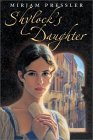
I always try to use books written during or about the time period we are studying, and just by chance, I discovered the young adult novel Shylock's Daughter by Mirjam Pressler. Based on Shakespeare's play, Shylock's Daughter presents the story from the perspective of four different characters: Shylock, his daughter Jessica, an adopted daughter raised as Jessica's sister but now Jessica's maid, and the housekeeper (the last two characters are Pressler's creation). Through Jessica, the city of Venice comes alive and the Ghetto becomes both a sanctuary and a prison. Through each of the major characters, we get a different perspective of Judaism. Shylock represents the importance of the Law; his housekeeper maintains the rich traditions and superstitions. Jessica rebels against her faith but cannot abandon it entirely. Amalie, the adopted daughter, struggles to make Judaism her own in a dangerous world that is constantly changing. Amalie, perhaps, is the daughter of the title. At the story's end, she begins a journey to Palestine, carrying the hope and promise of Judaism in her heart.

After reading Shakespeare's Daughter, we moved onto Manga Shakespeares' Merchant of Venice. As I mentioned in my previous post, this is a highly interpretive and abridged retelling, with definite anti-Semitic overtones. Shylock, for instance, is depicted as evil, and has an almost demonic appearance. Critics have debated whether Shakespeare was anti-Semitic. My daughter and I certainly debated it, and had some wonderful conversations about bigotry, prejudice and hatred.

Finally, we watched a DVD of the BBC 1980 production Shakespeare's Comedies: The Merchant of Venice starring Gemma Jones as Portia (she was excellent). My daughter was able to follow the play and really enjoyed it. In this production, scenery is quite spare, and the story depends on the actors' abilities and on Shakespeare's words. The beauty of his words lives on!

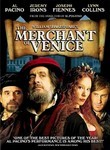
A quick word about the 2004 movie starring Al Pacino: My husband and I watched this and really enjoyed it. Al Pacino is fantastic as Shylock and gives a truly masterful performance. The casting and scenery is excellent and the movie really makes Shakespeare very accessible. Despite the fact that the DVD comes with a teacher's guide, this movie is R-rated for a reason! The relationship between Bassanio and Antonio takes on a decidedly homosexual nature (which may or may not have been intended in the original, but certainly helps to explain Antonio's depression and motivation). One scene occurs in a brothel, and shots of bare-breasted women are interspersed throughout. We were very disappointed that we could not share this fine drama with our 11 year old daughter; as always, you must decide for yourself.

Friday, January 1, 2010

Teaching Shakespeare

Recently while lunching with home school friends, one of the children said something abut reading graphic novels. I mentioned that last year, we used mangas to introduce Shakespeare's plays. My friend responded "What a good idea!"

Well, I was a little surprised, because I didn't think we did anything special. Surely, others have considered the use of mangas and graphic novels to introduce classic literature; within the library world, mangas have been a hot topic for some time now, and many libraries are quickly adding them to their collections. See the American Library Association's Great Graphic Novels for Teens. Titles include biographies, science, history, and fiction.

Mangas are basically a Japanese comic book. They have a very distinctive artistic style, and they are often made into anime (cartoons). Graphic novels are a Western version, and even old standards like the Hardy Boys mysteries are being adapted. Manga forms of Shakespeare are generally abridged versions of the original, and the art work is highly interpretive. For instance, in the Manga Shakespeare The Merchant of Venice, Shylock is given an evil, elfin appearance (to which I take exception--its very antisemitic). (Manga Shakespeare is a registered trademark for a manga publisher. I avoid their web site: It shuts my computer down every time! The publisher I prefer is Amulet Books.)

With their limited text and lively illustrations, mangas appeal to kids in general, reluctant readers, and those with reading problems or learning disabilities. And let's face it, Shakespeare is not easy reading, especially for a middle school student. So mangas are a wonderful way to introduce Shakespeare.

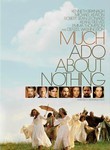
We started with Much Ado about Nothing, one of my favorites. The DVD starring Kenneth Branagh and Emma Thompson brings the play to life. Beautifully filmed in the warm Italian sun, Branagh and Thompson make the play incredibly accessible and fun to watch. My daughter loved it and watched it twice! The Manga Shakespeare was not available at that time (it was published in August, 2009).


Othello was much more challenging. We started by reading Othello, A Novel by Julius Lester (better known for his picture books). His retelling from an African-American perspective focuses more attention on the racial aspects of the story. Considered Young Adult literature, the book is very readable. We then took a look at the Amulet Manga, and read the play. I wanted to use the 1995 movie starring Kenneth Branagh and Laurence Fishburne, but its rated R. My husband and I watched it and enjoyed it, but we agreed that it was not appropriate for middle schoolers. Upper-level high school students might enjoy it, but parental discretion is advised.

The last play we studied was A Midsummer Night's Dream. My daughter found the Amulet Manga a little difficult to follow, so I would advise telling your students the story first, so that they are familiar with the plot. We then watched the movie version starring Calista Flockhart, Kevin Kline, and Michelle Pfeiffer. This is a very goofy, silly adaptation, set in the Victorian era, which uses bicycles as a major prop. A Midsummer Night's Dream is Shakespeare at his bawdiest (afterall, he appealed to the masses--as I explained to my daughter, his plays were like our blockbuster movies), and this adaptation lives up to it. Very silly, but fun. Rated PG-13, use your discretion.

On my next post, I will talk about The Merchant of Venice, which I taught with history, rather than with our literature studies.